



Daily Briefing Europe – 28 luglio: il Kospi in circuit breaker apre la settimana della Fed
Martedì 28 luglio 2026. La notte asiatica ha fatto quello che la seduta americana aveva solo accennato: il Kospi ha perso oltre il 10% ed è finito in circuit breaker, l’ottavo del 2026, con Samsung Electronics in calo di circa il 9% e SK Hynix di circa l’11%. Il Nikkei 225 è sceso di oltre il 4% bucando quota 62.000, minimo da fine maggio, con Tokyo Electron a -8,4% e Advantest a -7,5%. Wall Street aveva chiuso divisa il giorno prima: Dow +0,51% a 52.210,08, S&P 500 +0,02% a 7.413,18 dopo quattro sedute di ribasso, Nasdaq Composite -0,18% a 24.932,08. Sullo sfondo, la probabilità implicita di un rialzo della Federal Reserve entro il 16 settembre è salita all’82,4% dal 52,4% del 16 luglio, e Kevin Warsh parla domani pomeriggio.
Daily Briefing Europe – July 28: a Kospi circuit breaker opens Fed week
Tuesday, 28 July 2026. The Asian night did what the American session had only hinted at: the Kospi lost more than 10% and triggered a circuit breaker, the eighth of 2026, with Samsung Electronics down around 9% and SK Hynix around 11%. The Nikkei 225 fell more than 4% through 62,000, its lowest since late May, with Tokyo Electron at -8.4% and Advantest at -7.5%. Wall Street had closed split the day before: Dow +0.51% at 52,210.08, S&P 500 +0.02% at 7,413.18 after four down sessions, Nasdaq Composite -0.18% at 24,932.08. In the background, the implied probability of a Federal Reserve hike by 16 September has risen to 82.4% from 52.4% on 16 July, and Kevin Warsh speaks tomorrow afternoon.

Executive summary
La giornata di ieri a New York si è chiusa con un indice fermo e un mercato in movimento. L’S&P 500 ha guadagnato lo 0,02% a 7.413,18 punti, un numero che sembra dire assenza di notizie e invece nasconde un’escursione da 7.382,74 a 7.480,57 punti e una rotazione settoriale netta: difensivi di consumo e comunicazione in testa, energia e tecnologia in coda. Il Dow Jones ha guadagnato lo 0,51% a 52.210,08 punti grazie al crollo del greggio, il Nasdaq Composite ha perso lo 0,18% a 24.932,08 punti per colpa dei semiconduttori.
Il vero movimento è arrivato dopo, quando l’Asia ha aperto. Il Kospi ha ceduto oltre il 10% attivando il circuit breaker con sospensione delle contrattazioni e del program trading, l’ottava interruzione automatica di quest’anno. Le stime di mercato parlano di circa 396.000 miliardi di won, all’incirca 264 miliardi di dollari, cancellati dalla capitalizzazione di Seul in una sola seduta. Samsung Electronics ha perso circa il 9%, SK Hynix circa l’11%. In Giappone il Nikkei 225 è sceso di oltre il 4% sotto quota 62.000, con il Topix in calo di quasi il 3%, Tokyo Electron a -8,4% e Advantest a -7,5%. Hong Kong, invece, ha chiuso praticamente invariata a +0,10%.
La divergenza tra Seul e Tokyo da una parte e Hong Kong dall’altra è la sintesi della giornata: la vendita non colpisce la tecnologia in quanto tale, colpisce chi vive di margine sui semiconduttori mentre la capacità cinese entra in produzione.
Le ragioni sono due e si sommano. La prima è finanziaria e riguarda la struttura delle operazioni annunciate da Nvidia nelle ultime settimane: garantire il debito di un cliente, finanziare i suoi acquisti di chip, entrare nel suo capitale. La seconda è industriale e viene dalla Cina, tra il debutto borsistico di ChangXin Memory Technologies a Shanghai e le notizie sui progressi nella litografia DUV di produzione nazionale. Ieri si è aggiunto un terzo tassello: secondo il Financial Times ripreso da Reuters, dietro un contratto di locazione da 50 miliardi di dollari per un data center in Texas ci sarebbe Nvidia.
Sopra tutto questo c’è la Federal Reserve. Il FOMC annuncia domani alle 14:00 di New York e il consenso raccolto da FactSet indica un mantenimento, il quinto consecutivo, con il tasso di riferimento in area 3,50-3,75%. Ma il numero che si è mosso davvero è un altro: la probabilità implicita nei future sui Fed funds di un rialzo entro la riunione del 16 settembre è salita all’82,4%, contro il 52,4% del 16 luglio. In dodici giorni il mercato ha smesso di chiedersi se la Fed taglierà e ha cominciato a chiedersi quando alzerà.
1. La notte asiatica: il circuit breaker di Seul
Il Kospi ha perso oltre il 10% nella seduta di martedì, superando la soglia che fa scattare la sospensione automatica delle contrattazioni e del program trading. È l’ottavo circuit breaker del 2026 sul listino coreano, un numero che da solo racconta quanto l’indice di Seul sia diventato, negli ultimi anni, un derivato del ciclo dei semiconduttori più che una rappresentazione dell’economia coreana.
La composizione lo spiega. Samsung Electronics e SK Hynix insieme pesano una quota dell’indice che non ha equivalenti nei grandi mercati sviluppati. Quando la memoria viene riprezzata, il Kospi non ha altri settori abbastanza grandi da assorbire il colpo. Ieri Samsung ha ceduto circa il 9% e SK Hynix circa l’11%: le stime di mercato indicano circa 396.000 miliardi di won, all’incirca 264 miliardi di dollari, bruciati in capitalizzazione complessiva.
La leva amplifica la seconda parte della seduta
C’è un elemento tecnico che vale la pena isolare, perché spiega perché il movimento è accelerato invece di esaurirsi. Il mercato retail coreano fa un uso intensivo di ETF a leva quotati localmente. Quando l’indice scende oltre una certa soglia, quei prodotti devono vendere per mantenere l’esposizione dichiarata, e lo fanno in un mercato già in discesa. Il risultato è che la seconda metà della seduta si muove per ragioni meccaniche, non informative: il flusso di notizie si era già esaurito, il flusso di ordini no.
Questa distinzione conta per chi legge il dato da fuori. Un calo del 10% guidato da vendite forzate non contiene la stessa informazione di un calo del 10% guidato da una revisione degli utili. La prima si riassorbe più facilmente quando la pressione tecnica finisce; la seconda no. Non significa che il movimento sia privo di contenuto, significa che la sua ampiezza va scontata per la componente meccanica.
Il Giappone entra in correzione
A Tokyo il Nikkei 225 è sceso di oltre il 4%, bucando quota 62.000 e toccando il minimo da fine maggio. Il Topix, indice più ampio e meno concentrato sui grandi nomi tecnologici, ha perso quasi il 3%: la differenza tra i due è la misura di quanto il movimento sia specifico del comparto e non generale sul mercato giapponese.
Tra i singoli titoli, Tokyo Electron ha ceduto circa l’8,4% e Advantest circa il 7,5%. Sono due nomi che non producono chip ma le macchine e i sistemi di collaudo con cui i chip si producono e si verificano, e per questo reagiscono male alle notizie sulla capacità cinese: se una parte della domanda futura viene servita da attrezzature prodotte in Cina, il loro mercato indirizzabile si riduce a prescindere da quanti chip il mondo consumerà.
Hong Kong dalla parte opposta
L’Hang Seng ha chiuso in rialzo dello 0,10%, sostanzialmente invariato. La divergenza non è casuale: il listino di Hong Kong ospita una quota rilevante di società che, in questa vicenda, stanno dal lato dell’offerta che cresce e non da quello dei margini che si comprimono. La stessa notizia che toglie valore a Seul e Tokyo lo aggiunge, o quantomeno non lo sottrae, a chi produce dentro il perimetro cinese.
Nella stessa notte, sul fronte delle emissioni, Innolight ha prezzato la sua quotazione da 6,8 miliardi di dollari a Hong Kong al di sotto del massimo della forchetta, secondo Bloomberg. È un dettaglio che vale come termometro: la domanda per il rischio tecnologico asiatico c’è, ma non al prezzo più alto.
2. Che cosa ha rotto la fiducia sui semiconduttori
Per capire perché il comparto stia cedendo in modo così ordinato attraverso tre continenti, conviene separare le due questioni che il mercato sta trattando insieme. Sono diverse per natura e per orizzonte temporale, e confonderle porta a conclusioni sbagliate.
La prima questione: chi finanzia la domanda
Nelle ultime settimane Nvidia ha annunciato una serie di operazioni che hanno in comune una caratteristica: l’azienda che vende i chip partecipa al finanziamento di chi li compra. Garanzie sul debito di un cliente, finanziamento degli acquisti, partecipazioni azionarie in società che non hanno ancora un prodotto commerciale. Ciascuna operazione, presa da sola, ha una logica industriale difendibile: assicurarsi che la capacità di calcolo venga costruita, e costruita con la propria tecnologia.
Il problema nasce quando si sommano. Il mercato deve decidere quanta parte dei ricavi futuri di Nvidia sia domanda autonoma e quanta sia domanda che esiste perché Nvidia la sta finanziando. La differenza non è contabile ma di rischio: nel primo caso il fornitore incassa, nel secondo il fornitore incassa e contemporaneamente assume un’esposizione creditizia verso il cliente.
Ieri si è aggiunto un elemento. Secondo il Financial Times ripreso da Reuters, dietro un contratto di locazione da 50 miliardi di dollari relativo a un data center in Texas ci sarebbe Nvidia. Un impegno di locazione non passa dal conto economico come una vendita e non compare tra i crediti commerciali, ma è un obbligo di lungo periodo che entra nel profilo di rischio complessivo. Chi valuta il titolo deve tenerne conto anche se il bilancio lo classifica altrove.
Nessuna di queste operazioni implica che la domanda finale sia inventata. Implica che una parte del rischio si sta spostando dal cliente al fornitore, e che il mercato sta ancora cercando il prezzo giusto per quello spostamento.
La seconda questione: chi produrrà
La componente cinese è diversa e ha un orizzonte più lungo. Il debutto borsistico di ChangXin Memory Technologies a Shanghai ha dato un prezzo pubblico alla capacità di memoria prodotta in Cina. Non cambia i volumi del trimestre in corso, ma cambia il modo in cui il mercato sconta l’offerta dei prossimi tre o quattro anni, e con essa il livello dei prezzi a cui quell’offerta verrà assorbita.
A questo si sono aggiunte notizie sui progressi cinesi nella litografia DUV di produzione nazionale. La litografia è il collo di bottiglia dell’intera filiera: è il punto in cui il controllo occidentale sulle esportazioni ha finora funzionato meglio. Ogni segnale che quel collo di bottiglia si stia allargando dall’interno vale, per i fornitori giapponesi ed europei, più di un trimestre di ordini.
Il contrappeso, che pure c’è
Vale la pena registrare anche il segno opposto. Secondo DigiTimes, il presidente di SK ha dichiarato che Anthropic sta cercando forniture di chip da SK Hynix. Nella stessa direzione va la conferma che la domanda di chi addestra modelli di grandi dimensioni resta superiore all’offerta disponibile. Il problema di queste sedute non è che nessuno voglia comprare capacità di calcolo: è chi la paga, con quali soldi e chi la fabbricherà tra tre anni.
Nel frattempo la memoria è il punto in cui la pressione si vede per prima. Ieri a New York Sandisk ha perso l’11,25% chiudendo a 1.274,89 dollari, con Micron in scia. La ragione è strutturale: una GPU incorpora architettura, software e un ecosistema di sviluppo che rendono difficile la sostituzione, un chip di memoria è molto più vicino a una merce standardizzata. Dove il prodotto è standardizzato, la nuova capacità arriva prima al prezzo.
3. La chiusura di New York: un indice fermo, un mercato in rotazione
Il Dow Jones Industrial Average ha chiuso in rialzo dello 0,51% a 52.210,08 punti, con un guadagno di 262,83 punti. Il motore è stato il crollo del greggio: un indice a forte componente industriale, di trasporti e di beni di consumo beneficia direttamente di un costo dell’energia più basso, e lo fa nel trimestre in corso, non tra due anni.
L’S&P 500 ha chiuso a 7.413,18 punti, in rialzo dello 0,02%, un movimento di 1,20 punti. Il dato rilevante non è la variazione ma due elementi che la accompagnano: l’indice ha interrotto quattro sedute consecutive di ribasso, e l’escursione della giornata è andata da 7.382,74 a 7.480,57 punti. Quasi cento punti di ampiezza per finire dove si era cominciato significa che due forze di dimensione simile hanno agito in direzioni opposte.
Il Nasdaq Composite ha ceduto lo 0,18% a 24.932,08 punti, unico dei tre principali indici a chiudere in negativo. La classifica settoriale conferma la lettura: difensivi di consumo e comunicazione sono stati i comparti migliori, energia e tecnologia i peggiori. L’energia scende perché il petrolio scende, la tecnologia scende per le ragioni descritte sopra, e il resto del mercato assorbe entrambi i movimenti.
Le singole storie della seduta
Il titolo ha chiuso a 336,99 dollari, in rialzo dell’1,2%, e ha superato Nvidia come prima società americana per capitalizzazione di mercato. Non è un evento operativo, è il risultato aritmetico di due movimenti opposti nello stesso giorno.
Chiusura a 196,56 dollari, in calo di 10,28 dollari. Il titolo sconta insieme la questione del finanziamento circolare e le notizie sulla possibile produzione di massa di attrezzature per la fabbricazione di chip in Cina.
ServiceNow è salita mentre il comparto software recuperava parte delle perdite accumulate nell’anno. Palantir ha chiuso in rialzo del 7,00% a 131,53 dollari su oltre 36 milioni di azioni: la rotazione dall’hardware al software è stata la vera operazione della seduta.
Microsoft +2,0% a 389,15 dollari, Alphabet +2,3% a 326,54 dollari, Meta -0,3% a 593,32 dollari, Amazon -0,3% a 231,35 dollari, Tesla -1,4% a 308,56 dollari. Il gruppo si è mosso in ordine sparso, senza un fattore comune.
Materie prime, tassi e valute
L’oro ha guadagnato lo 0,28% chiudendo a 4.081,37 dollari l’oncia alla campana americana. Il rendimento del Treasury decennale è sceso di circa tre centesimi al 4,65%. È una combinazione che ha una logica precisa in questo contesto: il petrolio più basso toglie pressione al percorso dell’inflazione, e quindi ai tassi lunghi, senza per questo segnalare un peggioramento della crescita. Il bitcoin ha scambiato attorno ai 64.865 dollari.
Un’annotazione sul contesto strategico: una nota di Bank of America ha ricordato che, storicamente, il periodo tra agosto e ottobre è il peggiore dell’anno per i mercati azionari. Non è un’indicazione operativa, è il tipo di argomento stagionale che circola quando le valutazioni sono tese e il calendario dei catalizzatori si affolla.
4. Il petrolio dopo la pausa: come si è scaricato il premio
Il future sul Brent con consegna a settembre ha chiuso in calo dell’8,7% a 88,36 dollari al barile. Il WTI di pari scadenza ha perso il 7,5% chiudendo a 82,61 dollari. Sono variazioni giornaliere che, in condizioni normali, richiederebbero un evento di offerta: un impianto fermo, una decisione dell’OPEC, una sanzione. Qui non è successo niente di tutto questo.
Il movimento è il completamento di un riprezzamento cominciato venerdì sera, quando gli Stati Uniti hanno sospeso senza comunicati la campagna di attacchi contro l’Iran e Teheran ha dichiarato di aver interrotto le rappresaglie finché la pausa americana regge. Il mercato del greggio, nelle due settimane precedenti, aveva incorporato un premio per la probabilità che i barili smettessero fisicamente di arrivare. Quella probabilità si è ridotta e il premio si è scaricato.
Perché una pausa non è un accordo
Va tenuto presente che non esiste un documento firmato. Esiste un comportamento reciproco che dura da alcuni giorni e che, per costruzione, può interrompersi senza preavviso e senza che nessuno debba denunciare nulla. La differenza tra una tregua di fatto e un accordo formale non è retorica: determina la velocità con cui il premio di rischio può tornare.
Chi ha comprato greggio a 100 dollari due settimane fa e lo vede a 88 oggi non sta osservando un cambiamento nella produzione mondiale. Sta osservando un cambiamento nella distribuzione di probabilità degli scenari futuri. Quella distribuzione può spostarsi di nuovo, in entrambe le direzioni, nell’arco di una singola notizia.
Il collegamento con la politica monetaria
Il punto più importante è che questa discesa del greggio non è principalmente una notizia energetica. Nelle ultime tre settimane il petrolio era diventato il canale attraverso cui il mercato dei tassi rivedeva le proprie aspettative sulla Federal Reserve. Quando il Brent aveva superato i 100 dollari, la probabilità di un rialzo era salita; ora che è sceso sotto i 90, quella probabilità ha perso una delle sue tre gambe.
Solo una delle tre, però. Come si vede nella sezione successiva, le altre due non si sono mosse.
5. La Federal Reserve di domani e l’82,4% di settembre
Il Federal Open Market Committee annuncia la propria decisione domani, mercoledì 29 luglio, alle 14:00 di New York, le 20:00 italiane, con la conferenza stampa del presidente Kevin Warsh alle 14:30. Il tasso di riferimento si trova oggi nell’intervallo 3,50-3,75%.
Gli economisti interpellati da FactSet si aspettano un mantenimento, che sarebbe il quinto consecutivo. Il FedWatch del CME, che ricava le probabilità dai prezzi dei future sui Fed funds a trenta giorni, dava lunedì una probabilità attorno al 66% a una decisione di fermo per la riunione di domani. Il che significa, letto al contrario, che circa un terzo del mercato non escludeva un rialzo già in questa sede.
Il numero che si è davvero mosso
La cifra più significativa non riguarda domani ma settembre. La probabilità implicita di tassi più alti entro la riunione del 16 settembre è salita all’82,4%, contro il 52,4% del 16 luglio. Trenta punti percentuali in dodici giorni: è un movimento che in condizioni ordinarie richiederebbe un cambio di regime, e in effetti un cambio di regime è esattamente quello che il mercato sta prezzando.
All’inizio dell’anno la maggioranza degli economisti si aspettava almeno un taglio nel 2026. Nelle proiezioni diffuse dopo la riunione di giugno, nove membri del comitato su diciotto indicavano almeno un rialzo entro fine anno e uno solo un taglio. Il dibattito si è spostato in blocco.
Le tre spinte che tengono alta la probabilità
È la gamba che si è indebolita ieri. L’inflazione tendenziale americana era scesa dal 4,2% di maggio al 3,5% di giugno proprio grazie al rientro dei prezzi dei carburanti; la nuova escalation di luglio aveva rimesso pressione, la pausa la sta togliendo.
La componente di fondo dell’inflazione, quella che esclude alimentari ed energia, si è mossa molto meno dell’indice generale. È il segnale che il rincaro dei mesi scorsi è filtrato nella struttura dei costi e non si esaurisce con il petrolio.
Il potere di prezzo dei produttori di GPU e di memoria si trasferisce a valle su chi acquista hardware, e da lì sui prezzi finali. È una fonte di pressione inflativa che nasce dentro il settore considerato più deflativo dell’economia.
Un rialzo dei tassi rallenterebbe proprio la costruzione dei data center che sta generando quella pressione. È il motivo per cui il comparto tecnologico reagisce ai dati sull’inflazione con un’ampiezza superiore alla sua sensibilità teorica al costo del denaro.
La conseguenza pratica è che la conferenza stampa peserà più della decisione. Se il comitato mantiene i tassi fermi, come il consenso si aspetta, il mercato leggerà ogni parola sul percorso futuro cercando conferme o smentite a quell’82,4%.
6. Gli utili della settimana: quattro dei Magnifici sette
La settimana concentra in due sedute i conti di quattro delle maggiori società tecnologiche americane. Microsoft e Meta Platforms riportano mercoledì 29 luglio, dopo la chiusura e nello stesso giorno della decisione della Federal Reserve. Apple e Amazon riportano giovedì 30 luglio, sempre dopo la campana.
La voce che il mercato guarderà per prima non è il fatturato né l’utile per azione, ma la spesa in conto capitale e la sua guidance. Il ritmo annuo di investimenti delle grandi piattaforme viaggia oltre i 200 miliardi di dollari complessivi, e ogni revisione al rialzo di quella cifra ha due letture opposte: conferma la domanda di capacità di calcolo, e allo stesso tempo comprime la generazione di cassa libera che sostiene le valutazioni attuali.
| Giorno | Società | Il punto della lettura |
|---|---|---|
| Martedì 28 luglio | Consumo e pagamenti | Tenuta della spesa delle famiglie americane con l’energia ancora sopra la media dell’anno |
| Mercoledì 29 luglio | Microsoft, Meta Platforms | Guidance sugli investimenti in conto capitale nello stesso giorno della decisione della Fed |
| Giovedì 30 luglio | Apple, Amazon | Margini dei servizi, spesa per i data center e generazione di cassa |
| Venerdì 31 luglio | Chiusura della settimana | Bilancio complessivo di una settimana con tre eventi di sistema ravvicinati |
Un dato di contesto già disponibile: Alphabet ha riportato i conti del secondo trimestre mostrando un’ulteriore accelerazione della divisione cloud, con ricavi in crescita dell’82% rispetto allo stesso periodo dell’anno precedente, dopo il 45,2% del primo trimestre 2026, il 38,5% del quarto trimestre 2025 e il 35% del terzo. La progressione è il miglior argomento a favore della tesi secondo cui la domanda finale di capacità di calcolo esiste ed è pagata da clienti reali.
7. Il calendario macro e i dati di oggi
Il primo appuntamento della giornata è l’indice di fiducia dei consumatori del Conference Board, in uscita alle 10:00 di New York, le 16:00 italiane. È il dato che dirà quanto l’energia più cara di luglio abbia inciso sulle aspettative delle famiglie americane, e arriva a ventiquattro ore dalla decisione della Fed.
Perché la fiducia dei consumatori conta più del solito
In un ciclo in cui il dibattito monetario ruota attorno alle aspettative di inflazione, la componente prospettica di questi indici pesa quanto quella corrente. Se le famiglie hanno incorporato l’aumento dei carburanti nelle proprie previsioni, quel dato entra nel ragionamento del comitato indipendentemente da quanto il petrolio sia sceso nelle ultime settantadue ore.
Il resto della settimana
Dopo la Fed di mercoledì, l’attenzione si sposta sui dati di crescita e sul deflatore dei consumi personali, la misura di inflazione che il comitato guarda in via preferenziale. La sequenza è costruita in modo sfavorevole per chi cerca chiarezza: la banca centrale si esprime prima di vedere l’ultima lettura completa dei prezzi, e i mercati devono quindi prezzare due incognite in serie.
Fuori dagli Stati Uniti
La governatrice della Reserve Bank of Australia, Michele Bullock, ha dichiarato che l’economia si sta raffreddando e di non essere certa che i tassi siano abbastanza alti, secondo Bloomberg. È l’immagine speculare del dibattito americano e ricorda che il ciclo monetario globale non è sincronizzato: c’è chi teme di aver stretto troppo poco e chi teme di doverlo fare di nuovo dopo aver smesso.
8. Biotech: Capricor alla vigilia del comitato consultivo
Il titolo Capricor Therapeutics ha chiuso a 6,99 dollari, in calo del 64,5%, su quasi 30 milioni di azioni scambiate. Il movimento è la reazione alla pubblicazione, da parte della FDA, del documento informativo preparato per il comitato consultivo che si riunisce domani, mercoledì 29 luglio.
Nel documento i revisori dell’agenzia hanno scritto che lo studio non ha raggiunto gli endpoint primari e secondari di efficacia prespecificati e hanno sollevato obiezioni sulle modifiche al piano di analisi statistica. La società ha diffuso lunedì un comunicato in cui dichiara che i risultati sono regolati dal piano di analisi finale, nella versione chiusa prima dello sblinding, e di aver risposto a ogni richiesta ricevuta.
Perché un comitato consultivo è un evento a sé
Il comitato per le terapie cellulari e geniche esprime una raccomandazione non vincolante. La FDA non è tenuta a seguirla, e storicamente non sempre lo ha fatto, in entrambe le direzioni. Il valore informativo del voto sta altrove: nel confronto pubblico tra i revisori e la società, e nelle domande che i membri del panel scelgono di porre. Sono quelle a rivelare quale sia il punto realmente controverso.
La data obiettivo PDUFA resta il 22 agosto. Nell’intervallo tra il voto e quella scadenza il titolo scambierà su un’informazione parziale: una raccomandazione che non decide, in attesa di una decisione che non è ancora arrivata. È una configurazione che genera volatilità per costruzione, indipendentemente da come il panel si esprimerà.
Vale la pena registrare anche il contorno: secondo Stocktwits il titolo si avvia al peggior mese degli ultimi nove anni, mentre il sentiment della comunità retail sulla piattaforma si è fatto più ottimista dopo il crollo. Sono opinioni di trader non professionisti, non giudizi di analisti istituzionali, e vanno lette come misura dell’emotività del posizionamento, non come previsione.
9. Omeros e Outlook: due riprezzamenti opposti
La stessa seduta ha prodotto altri due movimenti significativi nel biotech, entrambi originati da eventi regolatori ma di segno opposto.
Omeros sale sul fallimento di un concorrente
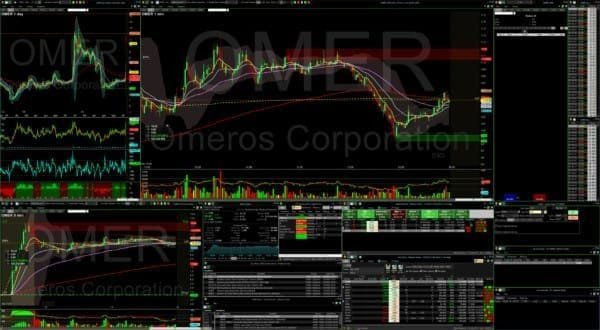
Omeros Corporation ha chiuso in rialzo del 15,8% a 11,34 dollari. Il catalizzatore non è venuto dall’azienda ma da AstraZeneca, il cui Ultomiris ha fallito uno studio di fase 3 in una patologia ematologica rara. Il mercato ha letto l’insuccesso come spazio competitivo lasciato libero per Yartemlea, il narsoplimab approvato dalla FDA nella microangiopatia trombotica associata a trapianto di cellule staminali ematopoietiche, prima e unica terapia autorizzata in quell’indicazione per adulti e bambini dai due anni in su.
La cautela d’obbligo riguarda le proporzioni. Un titolo che sale del 16% su una notizia che non lo riguarda direttamente sta riprezzando una probabilità futura, non un risultato acquisito. I parametri di valutazione restano tesi: il rapporto tra capitalizzazione e ricavi è molto superiore alla mediana storica della società.
Outlook restituisce parte del movimento post-approvazione
Outlook Therapeutics ha ceduto il 24,2% chiudendo a 1,07 dollari su circa 40 milioni di azioni, un volume enorme rispetto alla dimensione del titolo. Il contesto è l’approvazione da parte della FDA di Lytenava, bevacizumab-vikg, per la degenerazione maculare senile essudativa: prima formulazione oftalmica di bevacizumab autorizzata negli Stati Uniti per questa indicazione, arrivata il 24 luglio, in anticipo sulla data obiettivo del 29 luglio.
La società prevede dodici anni di esclusiva di mercato ai sensi del Biologics Price Competition and Innovation Act e la disponibilità commerciale negli Stati Uniti entro la fine del 2026. Nello stesso periodo BTIG ha alzato il giudizio sul titolo. La distanza tra questi elementi e un calo del 24% in una seduta è il tipico assestamento che segue un’approvazione su un titolo a bassa capitalizzazione, dove il posizionamento costruito in attesa dell’evento si smonta una volta che l’evento è passato.
Tre titoli, tre movimenti a doppia cifra, nessuno dei quali generato da un cambiamento nei fondamentali operativi dell’azienda in quel momento. È la definizione pratica di un comparto guidato dai catalizzatori.
10. Operazioni societarie e altri fatti della seduta
Johnson & Johnson ha offerto fino a 5,5 miliardi di dollari per chiudere il contenzioso legato al talco per bambini, secondo la BBC. Per un titolo difensivo di quelle dimensioni, la quantificazione di una passività legale che restava aperta pesa sulla valutazione più di un singolo trimestre di ricavi, perché rimuove un’incognita dal modello invece di aggiungere una cifra al conto economico.
Cadence Design Systems ha alzato le previsioni per il 2026 dopo un trimestre record e ha indicato un accordo importante con Intel tra i motori dei ricavi, secondo DigiTimes. È una conferma di un tema che sta emergendo da qualche settimana: gli strumenti di progettazione elettronica stanno reggendo meglio dei produttori di silicio, perché il loro modello di ricavo è ricorrente e meno esposto al prezzo del singolo componente.
Applied Digital ha riportato ricavi record nel quarto trimestre fiscale, secondo la sintesi della conference call. Sul fronte delle emissioni, Innolight ha prezzato la propria quotazione da 6,8 miliardi di dollari a Hong Kong sotto il massimo della forchetta. Nvidia ha inoltre annunciato la guida di una nuova alleanza per la sicurezza informatica dei sistemi di intelligenza artificiale.
Fuori dal perimetro tecnologico, BuzzFeed ha annunciato il licenziamento di un terzo del personale e Cracker Barrel ha sostituito l’amministratrice delegata dopo il fallimento del riposizionamento del marchio. Sono due storie diverse ma con lo stesso sottotesto: nei modelli di business a bassa marginalità il margine di errore, in un contesto di costi crescenti, si è ridotto.
Un caso di struttura, non di fatturato
Merita una nota T3 Defense, salita del 201% a 13,10 dollari. Il movimento non nasce da un contratto o da un risultato: la società ha eseguito un raggruppamento azionario nel rapporto di uno a centoventicinque per rispettare i requisiti di quotazione del Nasdaq, riducendo il flottante da circa 139,8 milioni a circa 1,12 milioni di azioni. A questo si è aggiunto un 13D che segnala una partecipazione del 16,67%. Su un flottante così sottile, un flusso speculativo modesto produce escursioni di prezzo estreme. I conti raccontano un’altra storia: circa 3,65 milioni di dollari di ricavi trimestrali contro una perdita netta di circa 27,1 milioni, e un titolo in calo di oltre il 97% su dodici mesi.
11. Watchlist Merlintrader alla chiusura di lunedì
Il quadro dei titoli seguiti alla chiusura di lunedì 27 luglio. I dati sono prezzi e variazioni di fine seduta.
| Titolo | Chiusura | Variazione | Nota |
|---|---|---|---|
| $CAPR Capricor | 6,99 $ | -64,5% | Documento informativo FDA in vista del comitato consultivo del 29 luglio |
| $OTLK Outlook Therapeutics | 1,07 $ | -24,2% | Assestamento dopo l’approvazione di Lytenava del 24 luglio |
| $OMER Omeros | 11,34 $ | +15,8% | Fallimento di fase 3 di un concorrente in una patologia adiacente |
| $PLTR Palantir | 131,53 $ | +7,0% | Rotazione dall’hardware al software nella seduta |
| $AI C3.ai | 8,82 $ | +8,2% | Stessa dinamica di comparto |
| $CTM Castellum | 0,67 $ | +7,6% | Difesa e servizi cyber a bassa capitalizzazione |
| $PDYN Palladyne AI | 5,17 $ | +4,7% | Autonomia robotica per applicazioni della difesa |
| $GERN Geron | 1,48 $ | +4,2% | Volumi sopra la media su quasi 9 milioni di azioni |
| $POET POET Technologies | 7,09 $ | +2,9% | Fotonica integrata, in controtendenza rispetto ai semiconduttori |
| $ONDS Ondas | 8,02 $ | +2,8% | Oltre 66 milioni di azioni scambiate |
| $PL Planet Labs | 21,00 $ | +2,6% | Osservazione della Terra |
| $BBAI BigBear.ai | 2,83 $ | +2,5% | Analitica per la difesa |
| $CORT Corcept | 91,12 $ | -4,5% | Presa di beneficio dopo la forza recente |
| $MNKD MannKind | 3,95 $ | -4,4% | Su oltre 5 milioni di azioni |
| $UNCY Unicycive | 5,13 $ | -5,0% | Small cap in area nefrologia |
| $CRMD CorMedix | 7,60 $ | -3,4% | Commercializzazione in ambito ospedaliero |
Il quadro complessivo della lista è stato più positivo che negativo, coerentemente con una seduta in cui il ribasso si è concentrato sui semiconduttori e sull’energia invece di distribuirsi. Le small cap non esposte a quei due comparti hanno beneficiato indirettamente del calo dei rendimenti obbligazionari.
Merlintrader bottom line
La seduta di ieri e la notte asiatica raccontano lo stesso fenomeno a due velocità. A New York il mercato ha assorbito la rotazione senza rompersi: un indice principale fermo, un altro in rialzo grazie all’energia più economica, il terzo in leggero calo per i semiconduttori. In Asia, dove la concentrazione settoriale non lascia via di fuga, lo stesso movimento ha prodotto un circuit breaker e una correzione.
Le tre scadenze delle prossime settantadue ore misurano la stessa domanda da angoli diversi. La fiducia dei consumatori di oggi dice quanto l’inflazione da energia sia entrata nelle aspettative delle famiglie. La Federal Reserve di domani dice quanto costa il denaro con cui si finanzia la costruzione di capacità di calcolo. I conti di Microsoft, Meta, Apple e Amazon dicono quanto quelle aziende intendono spendere e quanto il mercato è disposto a tollerare che spendano.
Il dato da tenere davanti agli occhi resta l’82,4%: la probabilità implicita di tassi più alti entro il 16 settembre. Se domani la comunicazione della banca centrale conferma quel percorso, il costo del capitale sale proprio mentre il comparto che ne ha più bisogno sta rivedendo le proprie ipotesi di domanda. Se lo smentisce, la reazione più violenta arriverà probabilmente dai listini asiatici, che in questo momento scontano lo scenario più severo.
Il tema di fondo non è se l’intelligenza artificiale generi domanda: è chi ne assume il rischio di credito lungo la catena e chi produrrà i componenti tra tre anni. Le sedute di questi giorni sono un tentativo collettivo di dare un prezzo a queste due domande.
Fonti primarie e fonti di riferimento
Fonti
- CNBC — future americani e Kospi in calo di oltre il 10%
- The Motley Fool — chiusure di indici, oro, rendimenti e singoli titoli del 27 luglio
- CNBC — Brent sotto i 90 dollari dopo la sospensione delle ostilità
- Reuters — i titoli asiatici dei semiconduttori e i timori sulla concorrenza cinese
- Reuters — il ribasso generalizzato dei mercati asiatici
- Associated Press — il Kospi in calo del 10% sulle vendite dei produttori di chip
- Korea JoongAng Daily — il circuit breaker sul listino di Seul
- Reuters — Nvidia dietro una locazione da 50 miliardi di dollari per un data center in Texas
- GlobeNewswire — il comunicato di Capricor sui materiali informativi della FDA
- GlobeNewswire — convocazione del comitato consultivo e data obiettivo del 22 agosto
- CBS News — attese sulla riunione della Federal Reserve del 29 luglio
- The Motley Fool — la probabilità FedWatch di un rialzo entro il 16 settembre
- Benzinga — calendario delle trimestrali delle grandi società tecnologiche
- Conference Board — indice di fiducia dei consumatori
- BBC — l’offerta di Johnson & Johnson per chiudere il contenzioso sul talco
- Benzinga — il rialzo di T3 Defense dopo il raggruppamento azionario
Executive summary
Yesterday’s session in New York closed with a flat index and a market in motion. The S&P 500 gained 0.02% to 7,413.18, a number that looks like an absence of news and instead hides a range from 7,382.74 to 7,480.57 and a sharp sector rotation: consumer defensive and communication at the top, energy and technology at the bottom. The Dow Jones gained 0.51% to 52,210.08 on the collapse in crude, the Nasdaq Composite lost 0.18% to 24,932.08 on semiconductors.
The real move came afterwards, when Asia opened. The Kospi fell more than 10%, triggering a circuit breaker that halted trading and program trading, the eighth automatic halt this year. Market estimates point to roughly 396 trillion won, about $264 billion, erased from Seoul’s market value in a single session. Samsung Electronics lost around 9%, SK Hynix around 11%. In Japan the Nikkei 225 fell more than 4% below 62,000, with the Topix down almost 3%, Tokyo Electron at -8.4% and Advantest at -7.5%. Hong Kong, by contrast, closed essentially unchanged at +0.10%.
The divergence between Seoul and Tokyo on one side and Hong Kong on the other is the day in miniature: the selling is not hitting technology as such, it is hitting those who live on semiconductor margin while Chinese capacity comes into production.
There are two reasons and they compound. The first is financial and concerns the structure of the deals Nvidia has announced in recent weeks: guaranteeing a customer’s debt, financing its chip purchases, taking equity in it. The second is industrial and comes from China, between the market debut of ChangXin Memory Technologies in Shanghai and reports of progress in domestically produced DUV lithography. Yesterday added a third piece: according to the Financial Times as reported by Reuters, Nvidia is behind a $50 billion lease on a Texas data centre.
Above all of this sits the Federal Reserve. The FOMC announces tomorrow at 2:00 p.m. New York time and the consensus gathered by FactSet points to a hold, the fifth in a row, with the policy rate in the 3.50-3.75% range. But the number that has really moved is a different one: the probability implied in Fed funds futures of a hike by the 16 September meeting has risen to 82.4%, against 52.4% on 16 July. In twelve days the market stopped asking whether the Fed will cut and started asking when it will hike.
1. The Asian night: Seoul’s circuit breaker
The Kospi lost more than 10% on Tuesday, crossing the threshold that triggers an automatic halt to trading and program trading. It is the eighth circuit breaker of 2026 on the Korean market, a number that on its own says how far the Seoul index has become, in recent years, a derivative of the semiconductor cycle rather than a representation of the Korean economy.
The composition explains it. Samsung Electronics and SK Hynix together carry a share of the index with no equivalent in the large developed markets. When memory is repriced, the Kospi has no other sectors big enough to absorb the blow. Yesterday Samsung lost around 9% and SK Hynix around 11%: market estimates indicate roughly 396 trillion won, about $264 billion, wiped from aggregate market value.
Leverage amplifies the back half of the session
There is a technical element worth isolating, because it explains why the move accelerated rather than exhausting itself. Korean retail investors make heavy use of locally listed leveraged ETFs. When the index falls beyond a certain threshold, those products must sell to maintain their stated exposure, and they do so into an already falling market. The result is that the second half of the session moves for mechanical reasons, not informational ones: the news flow had already run out, the order flow had not.
This distinction matters for anyone reading the data from outside. A 10% decline driven by forced selling does not carry the same information as a 10% decline driven by an earnings revision. The first unwinds more easily once the technical pressure ends; the second does not. That does not mean the move is empty of content, it means its magnitude should be discounted for the mechanical component.
Japan enters correction
In Tokyo the Nikkei 225 fell more than 4%, breaking below 62,000 and touching its lowest level since late May. The Topix, a broader index less concentrated in large technology names, lost almost 3%: the gap between the two measures how far the move is specific to the sector rather than general to the Japanese market.
Among individual names, Tokyo Electron lost about 8.4% and Advantest about 7.5%. Neither makes chips: they make the machines and test systems with which chips are produced and verified, which is why they react badly to news about Chinese capacity. If part of future demand is served by equipment produced in China, their addressable market shrinks regardless of how many chips the world consumes.
Hong Kong on the other side
The Hang Seng closed up 0.10%, essentially unchanged. The divergence is not accidental: the Hong Kong market hosts a meaningful share of companies that, in this story, sit on the side of supply that is growing rather than margins that are compressing. The same news that removes value in Seoul and Tokyo adds it, or at least does not subtract it, for those manufacturing inside the Chinese perimeter.
In the same night, on the issuance front, Innolight priced its $6.8 billion Hong Kong listing below the top of the range, according to Bloomberg. It is a detail that works as a thermometer: demand for Asian technology risk exists, but not at the highest price.
2. What broke confidence in semiconductors
To understand why the sector is giving way so consistently across three continents, it helps to separate the two questions the market is handling together. They differ in nature and in time horizon, and conflating them leads to wrong conclusions.
The first question: who finances demand
In recent weeks Nvidia has announced a series of transactions with one feature in common: the company selling the chips participates in financing those who buy them. Guarantees on a customer’s debt, financing of purchases, equity stakes in companies that do not yet have a commercial product. Each transaction, taken alone, has a defensible industrial logic: making sure compute capacity gets built, and built with its own technology.
The problem arises when they add up. The market has to decide how much of Nvidia’s future revenue is autonomous demand and how much is demand that exists because Nvidia is financing it. The difference is not accounting but risk: in the first case the supplier collects, in the second the supplier collects and simultaneously takes on credit exposure to the customer.
Yesterday added an element. According to the Financial Times as reported by Reuters, Nvidia stands behind a $50 billion lease relating to a Texas data centre. A lease commitment does not pass through the income statement as a sale and does not appear among trade receivables, but it is a long-dated obligation that enters the overall risk profile. Anyone valuing the stock has to account for it even if the balance sheet classifies it elsewhere.
None of these transactions implies that end demand is fabricated. It implies that part of the risk is shifting from customer to supplier, and that the market is still looking for the right price for that shift.
The second question: who will manufacture
The Chinese component is different and has a longer horizon. The market debut of ChangXin Memory Technologies in Shanghai put a public price on memory capacity produced in China. It does not change volumes in the current quarter, but it changes how the market discounts supply over the next three or four years, and with it the price level at which that supply will be absorbed.
To this were added reports of Chinese progress in domestically produced DUV lithography. Lithography is the bottleneck of the entire supply chain: it is the point where Western export control has so far worked best. Any signal that the bottleneck is widening from the inside is worth more, for Japanese and European suppliers, than a quarter of orders.
The counterweight, which does exist
The opposite sign is worth recording too. According to DigiTimes, SK’s chairman said Anthropic is seeking chip supply from SK Hynix. In the same direction runs the confirmation that demand from those training large models remains above available supply. The problem in these sessions is not that nobody wants to buy compute capacity: it is who pays for it, with whose money, and who will manufacture it three years from now.
Meanwhile memory is where the pressure shows first. In New York yesterday Sandisk lost 11.25% to close at $1,274.89, with Micron alongside. The reason is structural: a GPU embeds architecture, software and a development ecosystem that make substitution hard, while a memory chip is much closer to a standardised commodity. Where the product is standardised, new capacity reaches the price first.
3. The New York close: a flat index, a rotating market
The Dow Jones Industrial Average closed up 0.51% at 52,210.08, a gain of 262.83 points. The engine was the collapse in crude: an index heavy in industrials, transport and consumer goods benefits directly from lower energy costs, and it does so in the current quarter, not in two years.
The S&P 500 closed at 7,413.18, up 0.02%, a move of 1.20 points. What matters is not the change but two things around it: the index broke four consecutive down sessions, and the day’s range ran from 7,382.74 to 7,480.57. Nearly a hundred points of amplitude to finish where it started means two forces of similar size acted in opposite directions.
The Nasdaq Composite lost 0.18% to 24,932.08, the only one of the three main benchmarks to close negative. The sector table confirms the reading: consumer defensive and communication were the best performers, energy and technology the worst. Energy falls because oil falls, technology falls for the reasons described above, and the rest of the market absorbs both moves.
The individual stories of the session
The stock closed at $336.99, up 1.2%, and overtook Nvidia as the largest American company by market capitalisation. It is not an operating event, it is the arithmetic result of two opposite moves on the same day.
Close at $196.56, down $10.28. The stock is discounting both the circular financing question and reports about possible mass production of chipmaking equipment in China.
ServiceNow rose as the software complex recovered part of this year’s losses. Palantir closed up 7.00% at $131.53 on more than 36 million shares: the rotation from hardware into software was the real trade of the session.
Microsoft +2.0% at $389.15, Alphabet +2.3% at $326.54, Meta -0.3% at $593.32, Amazon -0.3% at $231.35, Tesla -1.4% at $308.56. The group moved without a common factor.
Commodities, rates and currencies
Gold gained 0.28% to close at $4,081.37 an ounce at the U.S. bell. The ten-year Treasury yield fell about three basis points to 4.65%. It is a combination with a precise logic in this context: cheaper oil takes pressure off the inflation path, and therefore off long rates, without signalling deteriorating growth. Bitcoin traded around $64,865.
A note on the strategic backdrop: a Bank of America note recalled that, historically, the August to October window is the worst of the year for equity markets. It is not an operational instruction, it is the kind of seasonal argument that circulates when valuations are stretched and the catalyst calendar is crowded.
4. Oil after the pause: how the premium unwound
September Brent futures closed down 8.7% at $88.36 a barrel. Same-month WTI lost 7.5% to close at $82.61. These are daily moves that, in normal conditions, would require a supply event: a plant offline, an OPEC decision, a sanction. None of that happened here.
The move completes a repricing that began on Friday evening, when the United States suspended, without any announcement, the campaign of strikes against Iran, and Tehran said it had halted retaliation as long as the American pause holds. Over the previous two weeks the crude market had embedded a premium for the probability that barrels would physically stop arriving. That probability fell and the premium unwound.
Why a pause is not an agreement
It should be kept in mind that no signed document exists. What exists is reciprocal behaviour that has lasted a few days and that, by construction, can stop without notice and without anyone having to renounce anything. The difference between a de facto truce and a formal agreement is not rhetorical: it determines how fast the risk premium can return.
Anyone who bought crude at $100 two weeks ago and sees it at $88 today is not observing a change in world production. They are observing a change in the probability distribution of future scenarios. That distribution can shift again, in either direction, on a single headline.
The link to monetary policy
The most important point is that this fall in crude is not primarily an energy story. Over the past three weeks oil had become the channel through which the rates market revised its expectations for the Federal Reserve. When Brent had moved above $100, the probability of a hike rose; now that it has fallen below $90, that probability has lost one of its three legs.
Only one of the three, however. As the next section shows, the other two have not moved.
5. Tomorrow’s Federal Reserve and September’s 82.4%
The Federal Open Market Committee announces its decision tomorrow, Wednesday 29 July, at 2:00 p.m. New York time, 8:00 p.m. Italian time, with chair Kevin Warsh’s press conference at 2:30 p.m. The policy rate currently sits in the 3.50-3.75% range.
Economists polled by FactSet expect a hold, which would be the fifth in a row. CME FedWatch, which derives probabilities from thirty-day Fed funds futures prices, put the probability of a hold at tomorrow’s meeting at around 66% on Monday. Read the other way, that means roughly a third of the market was not ruling out a hike at this very meeting.
The number that really moved
The most significant figure is not about tomorrow but about September. The implied probability of higher rates by the 16 September meeting has risen to 82.4%, against 52.4% on 16 July. Thirty percentage points in twelve days: in ordinary conditions that would require a regime change, and a regime change is exactly what the market is pricing.
At the start of the year most economists expected at least one cut in 2026. In the projections released after the June meeting, nine of eighteen committee members indicated at least one hike by year end and only one a cut. The debate has shifted wholesale.
The three pushes keeping the probability high
This is the leg that weakened yesterday. U.S. trailing inflation had fallen from 4.2% in May to 3.5% in June precisely because fuel prices retreated; July’s escalation put pressure back on, and the pause is taking it off again.
The core component of inflation, excluding food and energy, has moved far less than the headline. That is the signal that recent increases have filtered into the cost structure and do not end with oil.
Pricing power at GPU and memory makers passes downstream to hardware buyers and from there into final prices. It is a source of inflationary pressure originating inside the sector generally considered the most deflationary in the economy.
A rate rise would slow the very data-centre build-out generating that pressure. It is why the technology complex reacts to inflation prints with an amplitude beyond its theoretical sensitivity to the cost of money.
The practical consequence is that the press conference will matter more than the decision. If the committee holds rates steady, as consensus expects, the market will read every word about the path ahead looking for confirmation or contradiction of that 82.4%.
6. This week’s earnings: four of the Magnificent Seven
The week packs results from four of the largest American technology companies into two sessions. Microsoft and Meta Platforms report on Wednesday 29 July, after the close and on the same day as the Federal Reserve decision. Apple and Amazon report on Thursday 30 July, also after the bell.
The line the market will look at first is neither revenue nor earnings per share but capital expenditure and its guidance. Annual capex pacing at the large platforms runs beyond $200 billion in aggregate, and every upward revision of that figure carries two opposite readings: it confirms demand for compute capacity, and at the same time compresses the free cash generation that supports current valuations.
| Day | Company | What to read it for |
|---|---|---|
| Tuesday 28 July | Consumer and payments | Resilience of U.S. household spending with energy still above the year’s average |
| Wednesday 29 July | Microsoft, Meta Platforms | Capital spending guidance on the same day as the Fed decision |
| Thursday 30 July | Apple, Amazon | Services margins, data-centre spending and cash generation |
| Friday 31 July | Week’s close | Overall assessment of a week with three system-level events in quick succession |
One piece of context already available: Alphabet reported second-quarter results showing further acceleration in its cloud division, with revenue up 82% year on year, after 45.2% in the first quarter of 2026, 38.5% in the fourth quarter of 2025 and 35% in the third. The progression is the strongest argument for the view that end demand for compute capacity exists and is paid for by real customers.
7. The macro calendar and today’s data
The day’s first appointment is the Conference Board consumer confidence index, due at 10:00 a.m. New York time, 4:00 p.m. Italian time. It is the reading that will say how much July’s more expensive energy has fed into American household expectations, and it arrives twenty-four hours before the Fed decision.
Why consumer confidence matters more than usual
In a cycle where the monetary debate turns on inflation expectations, the forward-looking component of these indices weighs as much as the current one. If households have embedded higher fuel costs into their own forecasts, that reading enters the committee’s reasoning regardless of how far oil has fallen in the last seventy-two hours.
The rest of the week
After Wednesday’s Fed, attention shifts to growth data and to the personal consumption expenditures deflator, the inflation measure the committee watches preferentially. The sequence is built unhelpfully for anyone seeking clarity: the central bank speaks before seeing the latest complete price reading, so markets have to price two unknowns in series.
Outside the United States
Reserve Bank of Australia governor Michele Bullock said the economy is cooling and that she is not sure rates are high enough, according to Bloomberg. It is the mirror image of the American debate and a reminder that the global monetary cycle is not synchronised: some fear they have tightened too little, others fear having to do it again after stopping.
8. Biotech: Capricor on the eve of its advisory committee
Capricor Therapeutics closed at $6.99, down 64.5%, on almost 30 million shares. The move is the reaction to the FDA’s publication of the briefing document prepared for the advisory committee meeting tomorrow, Wednesday 29 July.
In the document, agency reviewers wrote that the study did not meet its prespecified primary and secondary efficacy endpoints and raised objections about changes to the statistical analysis plan. The company issued a statement on Monday saying the results are governed by the final analysis plan, in the version locked before unblinding, and that it has responded to every request received.
Why an advisory committee is an event of its own
The cell and gene therapy committee issues a non-binding recommendation. The FDA is not obliged to follow it, and historically has not always done so, in both directions. The informational value of the vote lies elsewhere: in the public exchange between reviewers and company, and in the questions panel members choose to ask. Those are what reveal the genuinely contested point.
The PDUFA target action date remains 22 August. In the gap between the vote and that deadline the stock will trade on partial information: a recommendation that does not decide, pending a decision that has not yet arrived. It is a configuration that generates volatility by construction, regardless of how the panel votes.
The surrounding colour is worth recording too: according to Stocktwits the stock is heading for its worst month in nine years, while retail sentiment on the platform has turned more optimistic after the collapse. These are the opinions of non-professional traders, not institutional analyst judgements, and should be read as a measure of how emotional the positioning is, not as a forecast.
9. Omeros and Outlook: two opposite repricings
The same session produced two other significant biotech moves, both originating in regulatory events but pointing in opposite directions.
Omeros rises on a competitor’s failure
Omeros Corporation closed up 15.8% at $11.34. The catalyst did not come from the company but from AstraZeneca, whose Ultomiris failed a phase 3 trial in a rare blood disorder. The market read the setback as competitive room left open for Yartemlea, the narsoplimab therapy approved by the FDA in haematopoietic stem cell transplant-associated thrombotic microangiopathy, the first and only authorised therapy in that indication for adults and children aged two and older.
The necessary caution concerns proportion. A stock rising 16% on news that does not directly involve it is repricing a future probability, not a realised result. Valuation metrics remain stretched: the ratio of market capitalisation to revenue sits far above the company’s own historical median.
Outlook gives back part of the post-approval move
Outlook Therapeutics fell 24.2% to close at $1.07 on around 40 million shares, an enormous volume relative to the size of the stock. The context is FDA approval of Lytenava, bevacizumab-vikg, for neovascular age-related macular degeneration: the first ophthalmic formulation of bevacizumab authorised in the United States for this indication, granted on 24 July, ahead of the 29 July target date.
The company expects twelve years of market exclusivity under the Biologics Price Competition and Innovation Act and U.S. commercial availability by the end of 2026. Over the same period BTIG raised its rating on the stock. The distance between those facts and a 24% single-session decline is the typical settling that follows an approval on a low-capitalisation name, where positioning built ahead of the event unwinds once the event has passed.
Three stocks, three double-digit moves, none of them generated by a change in the company’s operating fundamentals at that moment. That is the working definition of a catalyst-driven sector.
10. Corporate deals and the rest of the session
Johnson & Johnson offered up to $5.5 billion to settle baby powder litigation, according to the BBC. For a defensive stock of that size, quantifying an outstanding legal liability weighs on valuation more than a single quarter of revenue, because it removes an unknown from the model rather than adding a figure to the income statement.
Cadence Design Systems raised its 2026 outlook after a record quarter and flagged a major Intel deal among revenue drivers, according to DigiTimes. It confirms a theme that has been building for some weeks: electronic design tools are holding up better than silicon makers, because their revenue model is recurring and less exposed to the price of any single component.
Applied Digital reported record revenue in its fiscal fourth quarter, per the earnings call summary. On the issuance front, Innolight priced its $6.8 billion Hong Kong listing below the top of the range. Nvidia also announced it is leading a new alliance for the cybersecurity of artificial intelligence systems.
Outside the technology perimeter, BuzzFeed announced it is laying off a third of its staff and Cracker Barrel replaced its chief executive after a failed brand repositioning. Two different stories with the same subtext: in low-margin business models, the margin for error has narrowed in a rising-cost environment.
A case of structure, not revenue
T3 Defense deserves a note, up 201% at $13.10. The move does not come from a contract or a result: the company executed a one-for-125 reverse split to meet Nasdaq listing requirements, cutting the float from about 139.8 million to roughly 1.12 million shares. A 13D disclosing a 16.67% stake was added on top. On a float that thin, modest speculative flow produces extreme price swings. The accounts tell a different story: about $3.65 million in quarterly revenue against a net loss of roughly $27.1 million, and a stock down more than 97% over twelve months.
11. Merlintrader watchlist at Monday’s close
The picture across tracked names at the close of Monday 27 July. Figures are end-of-session prices and changes.
| Stock | Close | Change | Note |
|---|---|---|---|
| $CAPR Capricor | $6.99 | -64.5% | FDA briefing document ahead of the 29 July advisory committee |
| $OTLK Outlook Therapeutics | $1.07 | -24.2% | Settling after the 24 July Lytenava approval |
| $OMER Omeros | $11.34 | +15.8% | Competitor’s phase 3 failure in an adjacent condition |
| $PLTR Palantir | $131.53 | +7.0% | Hardware-to-software rotation during the session |
| $AI C3.ai | $8.82 | +8.2% | Same sector dynamic |
| $CTM Castellum | $0.67 | +7.6% | Small-cap defence and cyber services |
| $PDYN Palladyne AI | $5.17 | +4.7% | Robotic autonomy for defence applications |
| $GERN Geron | $1.48 | +4.2% | Above-average volume on almost 9 million shares |
| $POET POET Technologies | $7.09 | +2.9% | Integrated photonics, moving against the semiconductor tide |
| $ONDS Ondas | $8.02 | +2.8% | More than 66 million shares traded |
| $PL Planet Labs | $21.00 | +2.6% | Earth observation |
| $BBAI BigBear.ai | $2.83 | +2.5% | Defence analytics |
| $CORT Corcept | $91.12 | -4.5% | Profit taking after recent strength |
| $MNKD MannKind | $3.95 | -4.4% | On more than 5 million shares |
| $UNCY Unicycive | $5.13 | -5.0% | Nephrology small cap |
| $CRMD CorMedix | $7.60 | -3.4% | Hospital-channel commercialisation |
The overall picture across the list was more positive than negative, consistent with a session in which the decline concentrated in semiconductors and energy rather than spreading. Small caps not exposed to those two areas benefited indirectly from the fall in bond yields.
Merlintrader bottom line
Yesterday’s session and the Asian night tell the same story at two speeds. In New York the market absorbed the rotation without breaking: one main index flat, another higher on cheaper energy, the third slightly lower on semiconductors. In Asia, where sector concentration leaves no escape route, the same move produced a circuit breaker and a correction.
The three events of the next seventy-two hours measure the same question from different angles. Today’s consumer confidence says how far energy inflation has entered household expectations. Tomorrow’s Federal Reserve says what the money costs that finances the construction of compute capacity. The results from Microsoft, Meta, Apple and Amazon say how much those companies intend to spend and how much the market is willing to tolerate them spending.
The figure to keep in view remains 82.4%: the implied probability of higher rates by 16 September. If tomorrow’s central bank communication confirms that path, the cost of capital rises just as the sector that needs it most is revising its own demand assumptions. If it contradicts it, the sharpest reaction will probably come from Asian markets, which right now are discounting the harsher scenario.
The underlying issue is not whether artificial intelligence generates demand: it is who takes the credit risk along the chain and who will manufacture the components three years from now. These sessions are a collective attempt to put a price on those two questions.
Primary sources and reference sources
Sources
- CNBC — U.S. futures and the Kospi down more than 10%
- The Motley Fool — index, gold, yield and single-stock closes for 27 July
- CNBC — Brent below $90 after the suspension of hostilities
- Reuters — Asian semiconductor stocks and Chinese competition fears
- Reuters — the broad selloff across Asian markets
- Associated Press — the Kospi down 10% on chipmaker selling
- Korea JoongAng Daily — the circuit breaker on the Seoul market
- Reuters — Nvidia behind a $50 billion Texas data centre lease
- GlobeNewswire — Capricor statement on the FDA briefing materials
- GlobeNewswire — advisory committee convocation and the 22 August action date
- CBS News — expectations for the 29 July Federal Reserve meeting
- The Motley Fool — FedWatch probability of a hike by 16 September
- Benzinga — big technology earnings calendar
- Conference Board — consumer confidence index
- BBC — Johnson & Johnson offer to settle the talc litigation
- Benzinga — T3 Defense surge after the reverse split